Certainty and What It Destroys
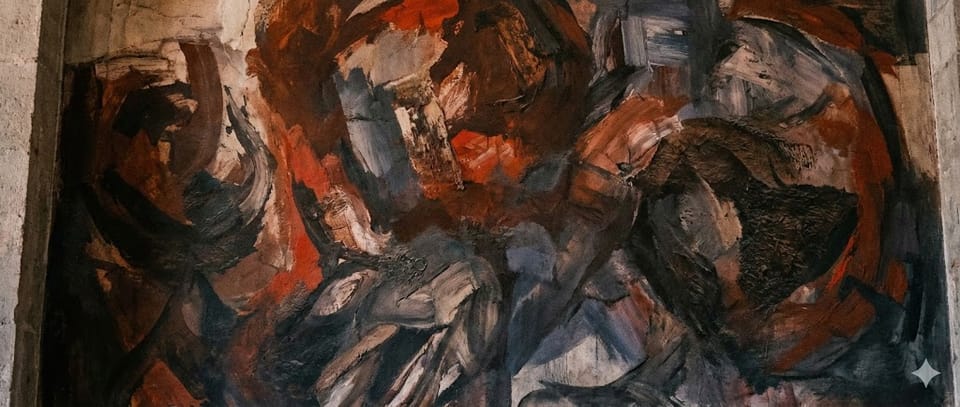
We’ve been in Mérida for the past two weeks for our wedding celebration with Katia’s family here.
We got married in July back in the US, and now we’re doing it again—same marriage, different celebration, the people who couldn’t make it to DC. Between all the logistics and family gatherings, Katia’s mom suggested we visit the Palacio de Gobierno. She wanted to show us the murals.
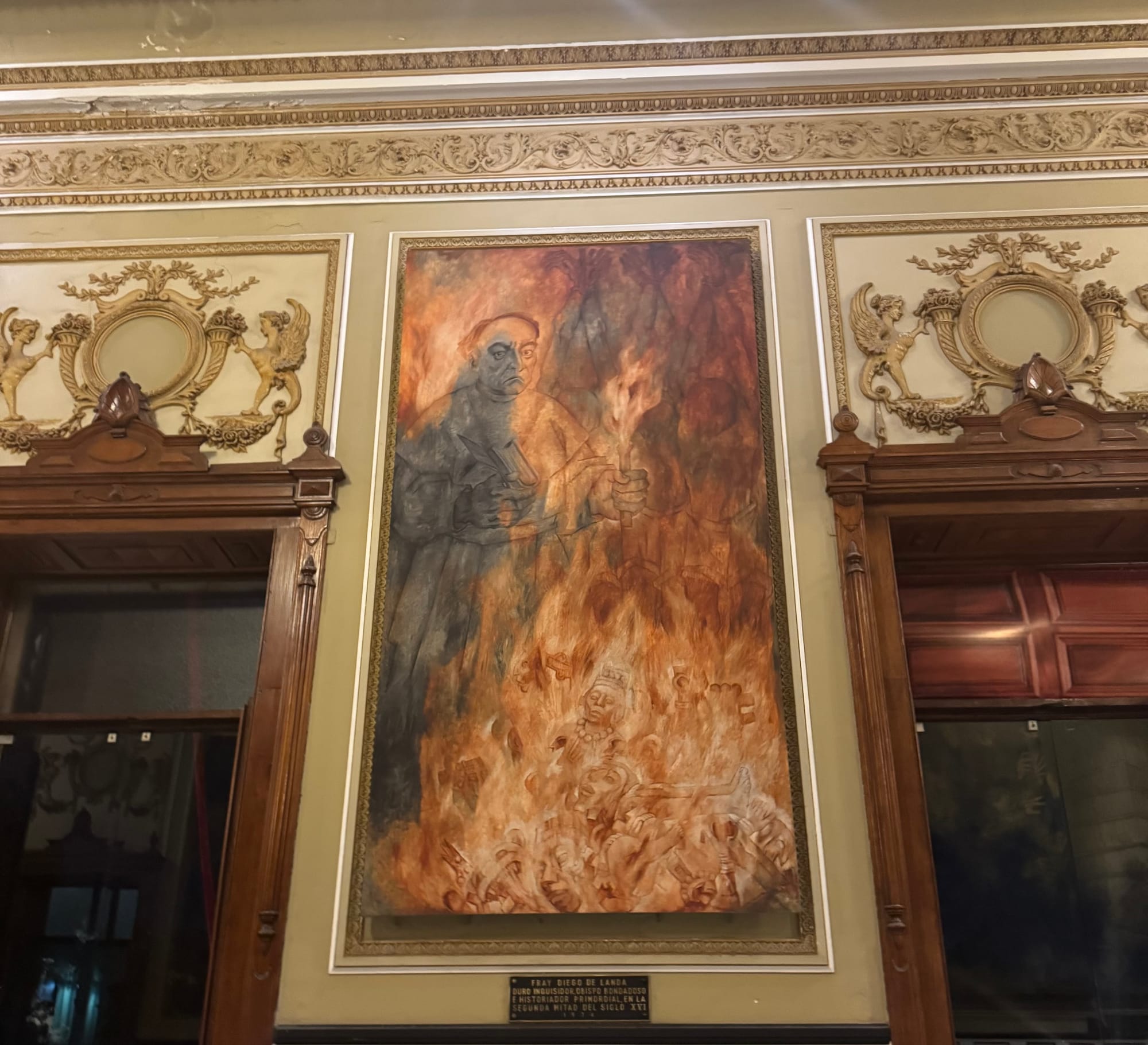
The building sits on the main plaza, classic colonial architecture that now houses the state government. Inside, covering the walls of the main staircase and upper corridors, are these massive murals by Fernando Castro Pacheco. They document Yucatecan history, but mostly they document what the Spanish did when they arrived.
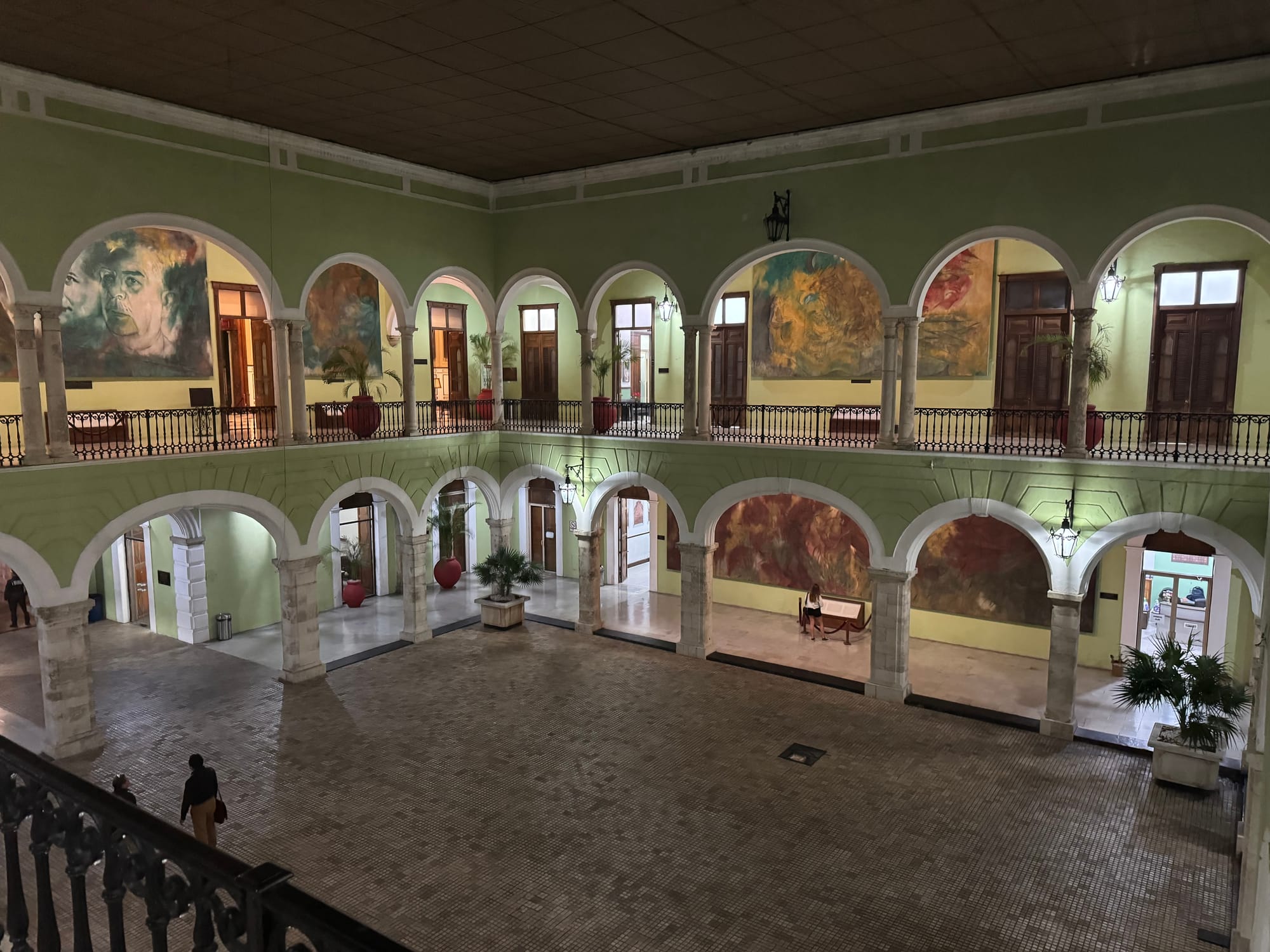
The images are brutal. Not stylized or softened. Enslavement. Torture. Forced conversion. Mayans being branded like livestock. Children torn from parents. The systematic destruction of codices—centuries of accumulated knowledge burned because it contradicted European certainty about how the world worked. One panel shows the Requerimiento being read, Spanish soldiers standing over kneeling indigenous people, the legal justification for conquest literally being performed before the violence that justification enabled.
I wasn’t expecting to tear up. But standing there with Katia and her mom, looking at these images that document what happened to her family’s ancestors, to the people who built this city before the Spanish renamed it and restructured it and claimed it—I couldn’t hold it together.
Katia has seen these murals countless times. She grew up with this history in a way I didn’t. For me it landed with a force I hadn’t anticipated.
What got me wasn’t just the violence. It was the care taken to justify it first. The Spanish built entire theological and legal frameworks before they did anything. Papal bulls granting them authority. The Requerimiento turning conquest into lawful procedure. They documented the rationale, made it official, wrapped brutality in the language of divine mandate and legal necessity. The architecture of justification came before the violence, made the violence possible.
I’ve sat through enough corporate restructurings to recognize the pattern. Someone builds a framework that transforms harm into inevitability. There’s data involved. Strategic language about market forces or competitive dynamics or fiduciary responsibility. By the time actual people are affected, the decision barely registers as a choice. It’s presented as an unavoidable response to circumstances no one controls.
The Spanish had papal authority. We have business cases. Different eras, same mechanics. Both convert “we chose this” into “circumstances required this.”
I’ve built these frameworks myself. Been the person constructing rationale that makes a difficult decision feel less like my decision and more like an inevitable outcome of forces beyond my control. I’ve also been on the other side, sitting in rooms where my objections get reframed as misunderstanding, where the way I process information gets treated as evidence I’m not grasping the strategic reality.
When you’re a leader who wasn’t expected to be there—neurodivergent, different background, whatever marks you as the exception in the room—you develop a sensitivity to these patterns because you’ve experienced what it feels like when someone’s carefully constructed logic erases your reality. You learn to distinguish between genuine constraints and performed inevitability.
Which leaves you with a choice. You can get better at building justification structures than the people who excluded you, become fluent in institutional certainty. Or you can refuse that performance entirely.
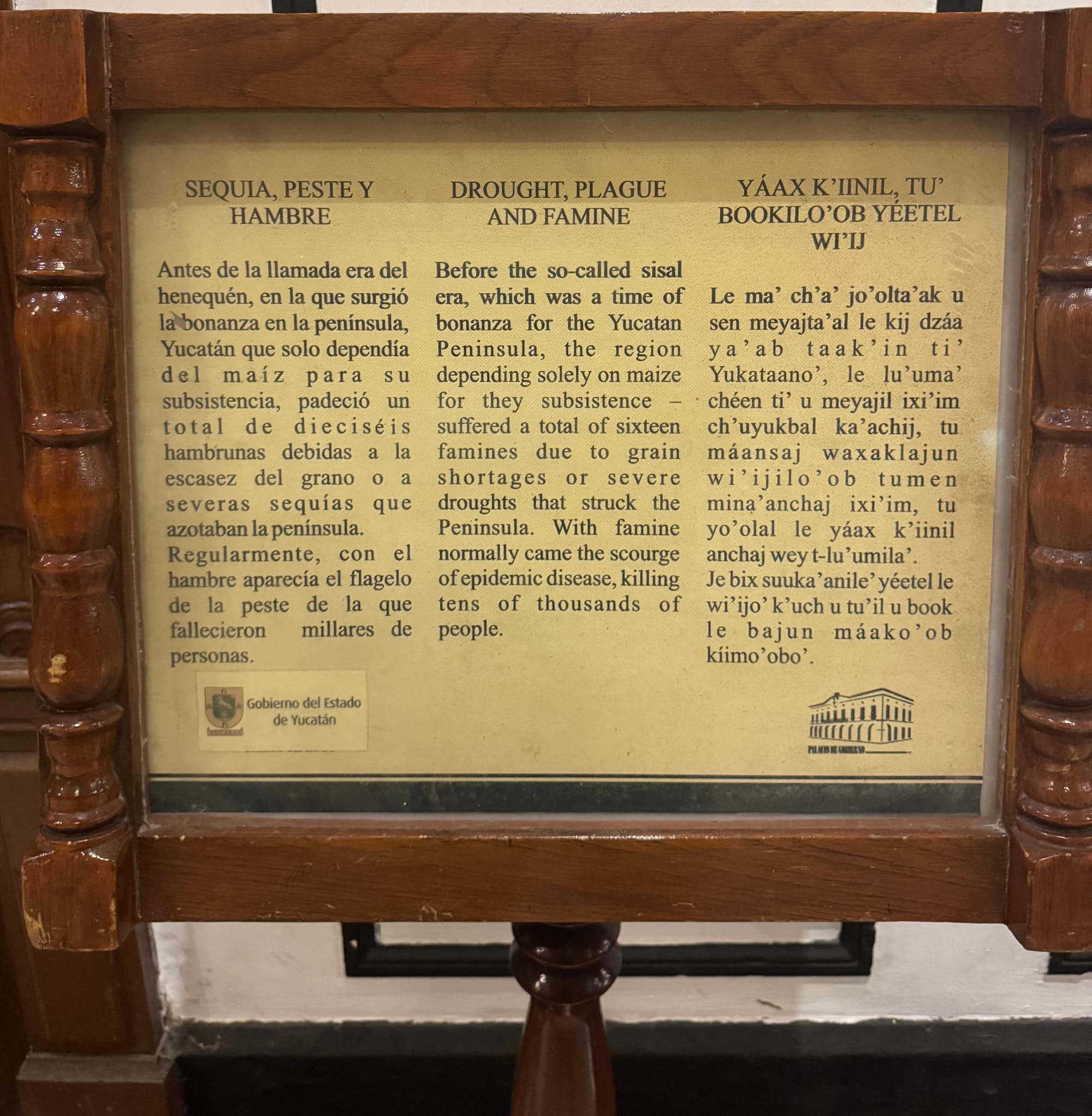
The murals show what the Mayans had before the Spanish arrived. Astronomical observations precise enough to track Venus over centuries. Water management systems supporting dense urban populations in challenging terrain. A written language, mathematical concepts including zero, frameworks for understanding time that were genuinely sophisticated.
None of it mattered when certainty showed up with ships and institutional backing. Knowledge lost to confidence. Complexity burned in favor of control.
Organizations still operate this way. The leader who speaks without hedging gets heard over the one who acknowledges nuance. A polished narrative wins the room even when it obscures truth. Doubt registers as weakness regardless of whether that doubt reflects intellectual honesty or actual expertise aware of its own limits.
I got diagnosed as neurodivergent at 29. Spent the years before that feeling like I processed things wrong, thought in patterns that didn’t match what rooms expected. Turned out I wasn’t broken, just different. But I’d already absorbed plenty of messages about what counted as legitimate thinking versus what got dismissed as overthinking or failure to see the bigger picture.
The Mayans had knowledge systems that worked. They just didn’t perform certainty in ways that survive conquest.
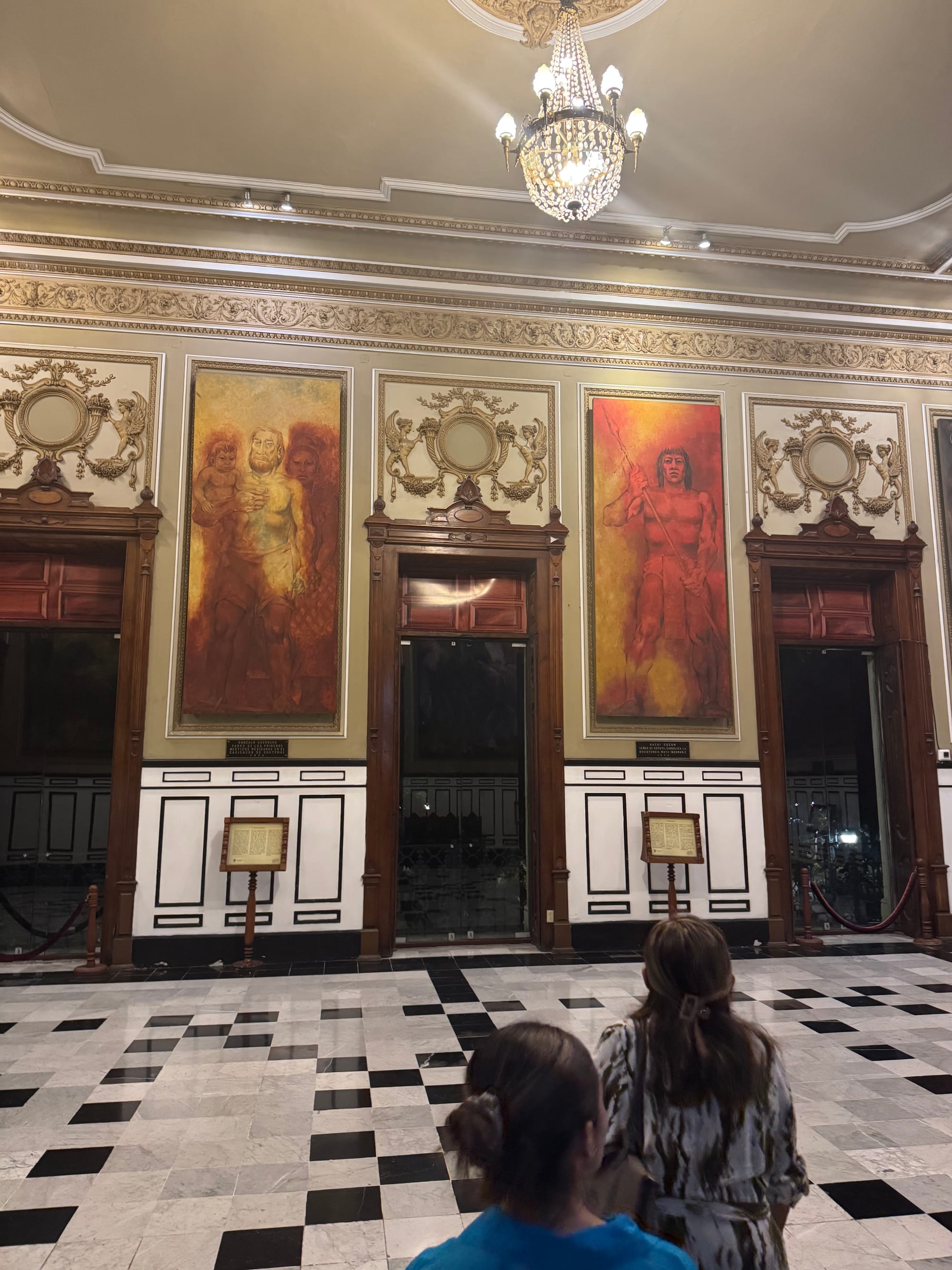
Walking out of the Palacio back into the plaza, back to wedding preparations and family meals and the regular rhythm of Katia’s life here, I kept thinking about how those justification structures from five hundred years ago are still load-bearing. Not metaphorically. The street grid, the architecture, the language layering Spanish over Mayan, the channels through which power and resources move—all of it shaped by decisions made centuries ago and never fully dismantled.
You inherit systems you didn’t design. As a leader, especially one who doesn’t fit the expected template, you navigate structures built by and for people who aren’t you. Org charts. Communication norms. Unstated rules about who gets automatic credibility and who has to prove themselves repeatedly. None of it is natural.
All of it is constructed. But it’s so embedded it feels like physical law.
Emotional intelligence in that context isn’t just reading a room. It’s recognizing which aspects of the room were designed to exclude you, then deciding how to operate in that space without either replicating the same exclusionary structures or getting destroyed by them.
There’s something about marrying into a family whose history includes being targeted by someone else’s justified certainty, while also being a leader who regularly enters rooms where people still perform that certainty in ways that dismiss other forms of knowledge. It stops being abstract. You’re having dinner with family who live inside a history that never finished, and you’re also the person deciding how to show up tomorrow in spaces where power still moves through the same old channels.
I don’t have clean answers about what you’re supposed to do with that. Recognizing the pattern doesn’t automatically show you how to disrupt it without just building a different version of the same thing. But maybe the starting point is refusing to look away. Not treating five hundred years like it created actual distance. Not pretending our justification frameworks are more enlightened just because we use different vocabulary.
Standing in front of those murals, trying not to completely lose it in front of my mother-in-law, I realized the weight of what we inherit isn’t optional.
You don’t get to decide whether you carry it. You only get to decide whether you see it clearly.