

The Balance: Respect vs. Hatred
Respect at work doesn't come from being likable. It comes from being credible under pressure.
In The Prince, Machiavelli argued that it is better for a leader to be feared than loved, if you have to choose. Most people misinterpret this as a license to be an asshole. But Machiavelli drew a sharp line between being feared and being hated.
Fear, in a corporate sandbox, is just predictability and consequences. It’s people knowing exactly where your boundaries sit. Hatred is different. Hatred is what happens when you cross into mindless cruelty, petty politics, or actively making life miserable for the people around you. Widespread hatred inevitably leads to rebellion, which destroys whatever authority you’ve built.
We see this breakdown constantly with weak managers. When an insecure leader tries to manufacture respect through fear, it almost always manifests as micromanagement. They mistake control for credibility. They track your status dot, obsess over arbitrary deadlines, hoard information, and second-guess every decision because they lack the actual competence to inspire respect. That isn't strength; it’s anxiety disguised as authority. It creates a toxic environment of hyper-surveillance that breeds immediate hatred and eventual quiet quitting.
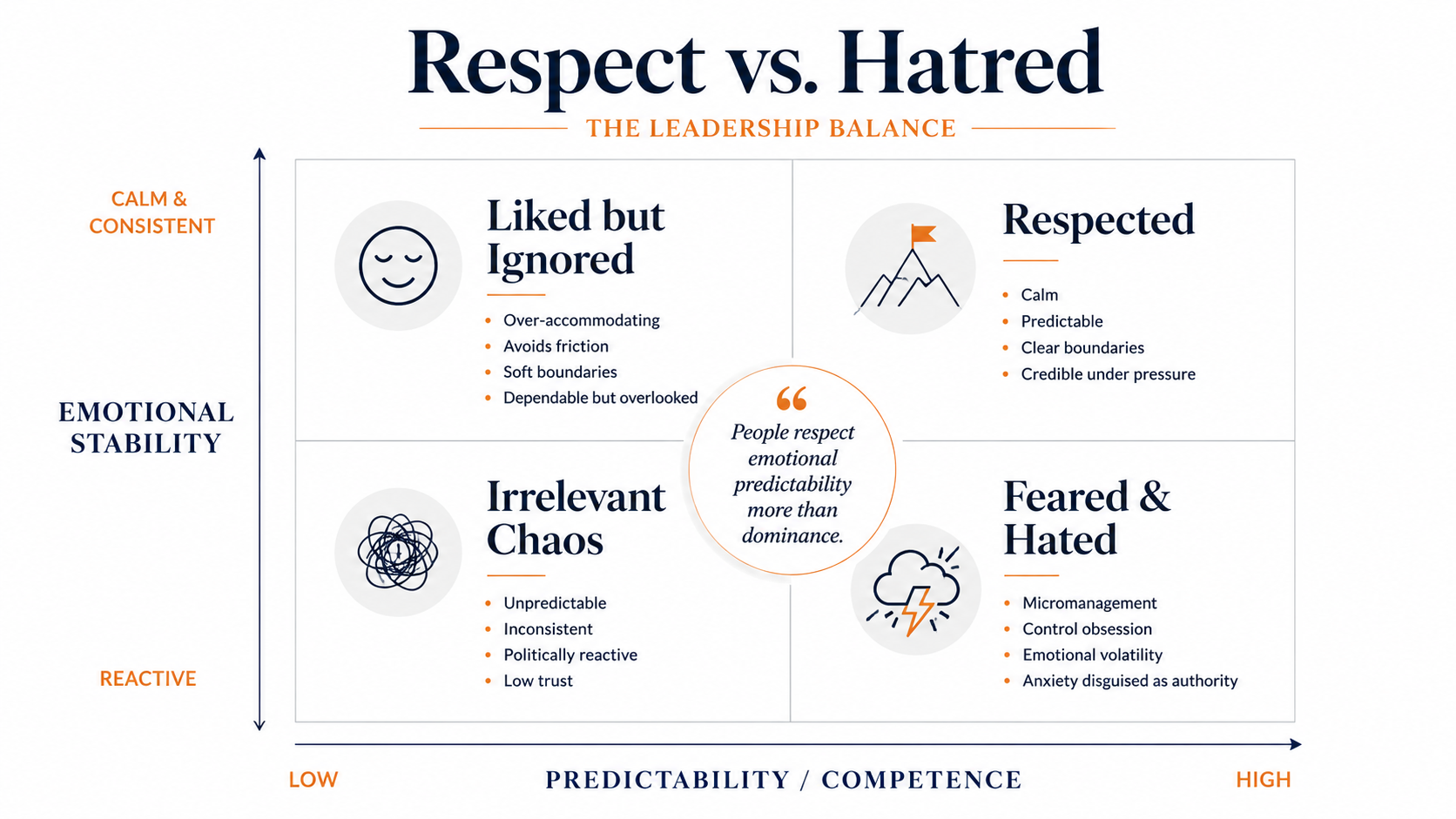
But true respect requires walking a different tightrope: establishing decisive strength without breeding raw resentment.
The problem is that corporate environments actively punish visible boundaries right up until the moment they suddenly reward them. Early in your career, organizations reward over-functioning. The person who says yes to everything gets labeled collaborative. The person who absorbs chaos without complaint gets labeled dependable. By the time people realize they’ve trained others to treat them like an extension of the org chart rather than a peer, resentment has already calcified.
Falling into this trap isn't a sign of weakness. It’s conditioning.
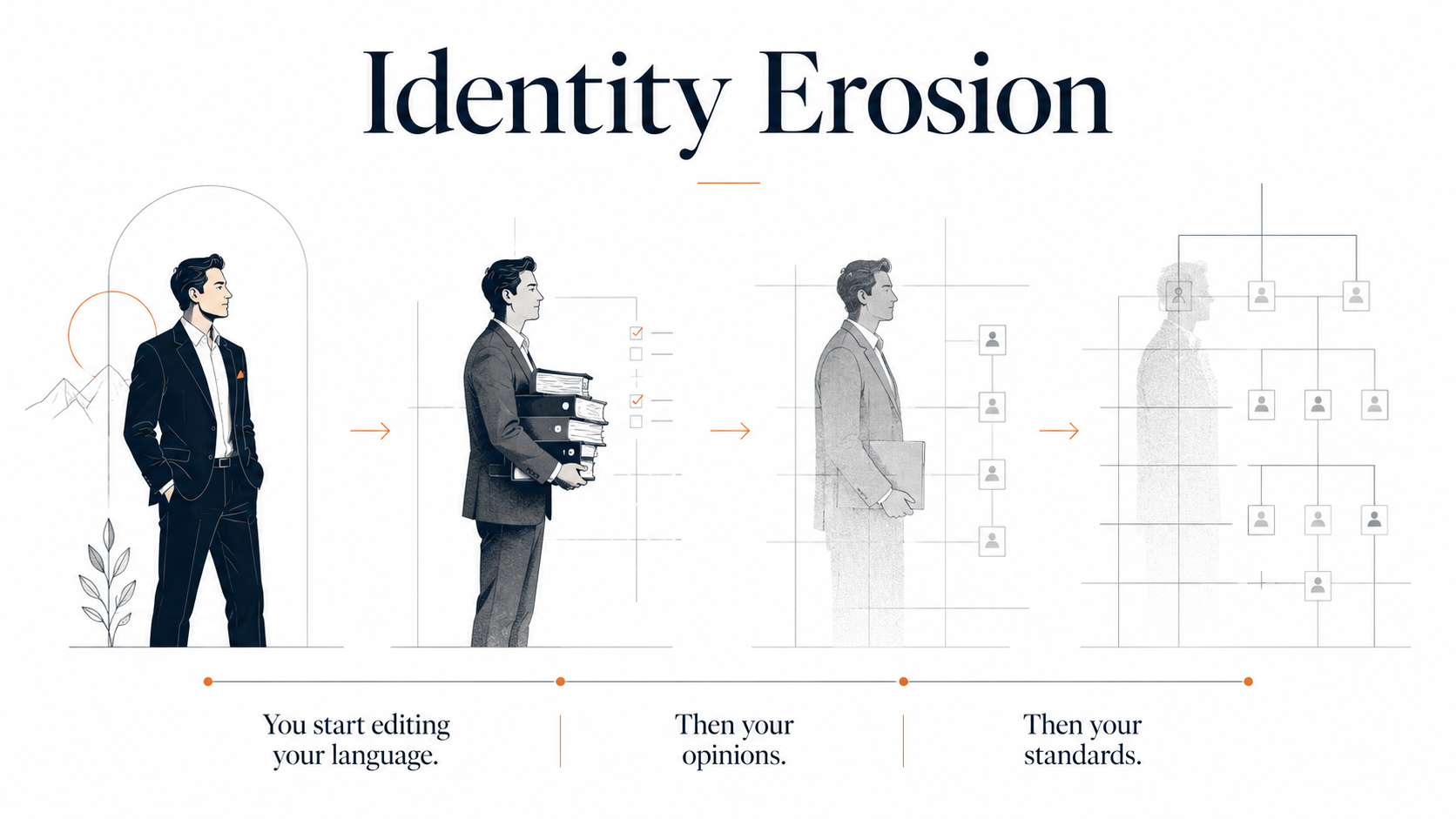
The cost of being perpetually agreeable isn't just burnout—everyone writes about burnout. It’s identity erosion. Identity erosion is nastier because it happens slowly and gets rewarded externally while it’s happening. You start editing your language to avoid discomfort. Then your opinions. Then your standards. Eventually, you lose your memory of what you actually think.
Breaking that cycle requires shifting the focus from how much people like you to how accurately they can predict the consequences of crossing your lines.
People respect emotional predictability more than dominance. The most respected people in an organization are rarely the loudest. They’re the ones whose reactions are boringly consistent. No emotional whiplash. No performative outrage. No random exceptions based on mood or politics. You know exactly what happens when they commit to something, reject something, or draw a line. That reliability becomes social gravity.
Most bad leaders think intensity creates authority. In reality, unpredictability destroys trust faster than softness ever will. True boundaries are established through mechanical consistency.
In practice, it looks remarkably quiet:
- Someone tries to dump work on you last minute: You say no. Not with a long, defensive justification. Just no.
- Someone takes credit for your work in a meeting: You correct the record immediately. Not passive-aggressively, but factually and on the spot.
- You own a timeline: You hit it. Every time. Or you renegotiate the moment the variables change, not after the deadline has passed.
- You speak: You stop softening your language to manage other people's comfort. You stop saying, "I think maybe we could look at alternative options," when you actually mean, "This plan will fail."
The people who command respect aren't the ones keeping everyone comfortable, nor are they the insecure micromanagers watching your every move. They are the ones who make it completely transparent where they stand, what they will tolerate, and what happens when those lines get blurred.
Admiration is a bonus if you can earn it through sustained, hard-won results. But predictable strength is the foundation. They shouldn’t be afraid of a tyrant, but they should be deeply hesitant to waste your time, ignore your input, or assume you’ll look the other way.
The uncomfortable truth underneath the whole thing is that a lot of workplace dysfunction comes from people wanting the appearance of being respected without tolerating the social friction required to become difficult to exploit.
Demonstrate your boundaries once, and people stop testing them.