"Soft Skills Don't Scale" and Other Lies We Tell at Work
A few years ago, I was in a meeting with a VP who had that classic executive presence.
You know the type—sharp speaker, always confident, never says “I don’t know.” Within minutes, they’d taken over the conversation. Interrupted someone mid-sentence. Talked past a real tension in the room. Declared a decision. Moved on.
Afterwards, someone turned to me and said, “Damn, that was impressive.” I remember thinking, was it?
It was clean. It was decisive. It was also tone-deaf, dismissive, and completely unaware of what wasn’t being said in the room. But in corporate environments—especially in high-growth, high-status tech companies—that kind of behavior often gets misread as leadership.
That meeting stuck with me because it wasn’t the exception. It was the norm.
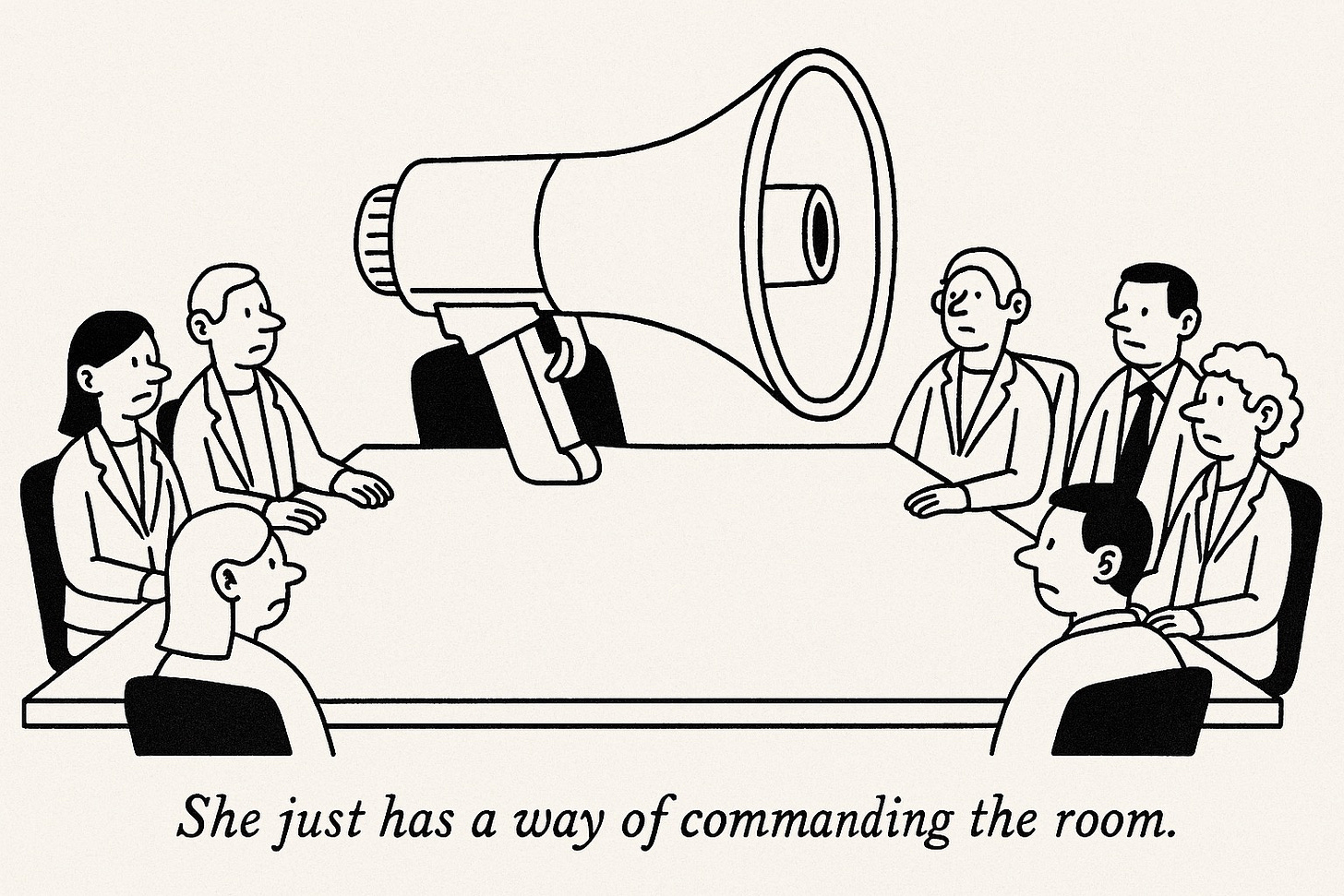
The truth is, most companies talk about emotional intelligence a lot more than they actually value it. We say we want empathy. Self-awareness. Vulnerability. But when it comes down to who gets promoted, who gets heard, who gets funded—we still gravitate toward the people who speak with conviction, even when they’re completely out of touch.
We reward what looks like confidence. We reward what sounds like clarity. And we often ignore the people doing the harder, quieter work: holding tension. Sensing mood. Naming the thing nobody wants to say out loud. Giving people room to be human before demanding performance.
It’s not that tech culture hates emotional intelligence. It’s more that it doesn’t know how to measure it, so it pretends it’s not as important. It becomes a slide in onboarding, a line in your performance review, a buzzword in someone’s LinkedIn headline.
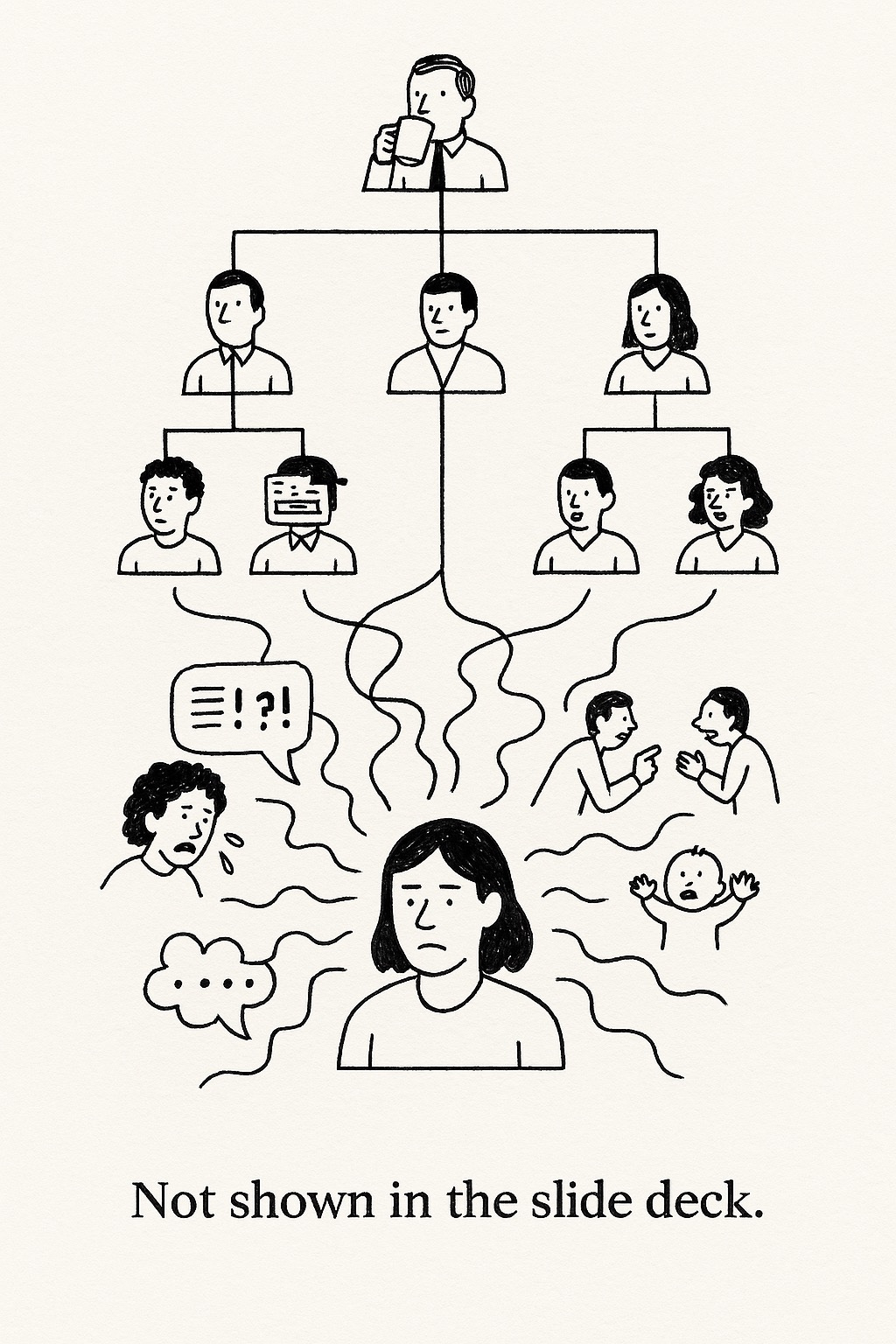
Meanwhile, the emotional labor of actually making a team functional still falls on the same group of people—usually the most emotionally attuned folks in the room. Often women. Often people of color. Often people who’ve had to read the room their whole lives just to stay in it.
And that labor? It’s invisible.
Here’s what I’ve seen over and over: The person with the best ideas doesn’t always get listened to. The person who can de-escalate a conflict and rebuild trust rarely gets credit. The person who absorbs the stress of a team to keep things from falling apart? They’re told they’re “too emotional” or “not strategic enough.”
Meanwhile, the person who talks over everyone else, dominates the whiteboard, and has an answer for everything—even when they don’t understand the problem—they’re seen as a high-performer. A “strong leader.” Executive material.
We confuse certainty with wisdom. We confuse charisma with clarity. And we confuse emotional distance with objectivity, as if people who feel things are somehow less qualified to lead.
But here’s the thing: Emotional intelligence isn’t some soft skill for middle managers to sprinkle on top of strategy. It’s the core of how teams function. It’s what allows people to trust each other, challenge each other, recover from mistakes, and stay in the game when things get hard.
The companies that ignore this—or worse, mock it—aren’t just creating toxic cultures. They’re making bad decisions. They’re leaving value on the table because they can’t hear it through the noise of someone who sounds more “executive.”
I’m not writing this because I think I’ve nailed it. I’ve played the game, too. I’ve muted parts of myself to fit in. I’ve talked louder than I needed to just to be heard. I’ve learned how to sound like I had it all figured out, even when I was still processing what the hell was going on. It works—until it doesn’t.
Until people burn out. Until trust erodes. Until your most emotionally intelligent team members quietly check out because they’re tired of being the buffer while someone else gets the credit.
So yeah, I’m tired of hearing people say “soft skills don’t scale.” Because what actually doesn’t scale is dysfunction, ego, and decision-making that ignores the human cost. What doesn’t scale is building a company full of high-output, low-trust leaders who don’t know how to listen when the room gets quiet.
This isn’t a productivity newsletter. This is for the thinkers, the feelers, the ones doing the inner work and the outer hustle. The ones building something sustainable—internally and externally—even if it takes a little longer.
I don’t have a playbook for fixing it. But I do think it starts with telling the truth. That emotional intelligence isn’t fluff. It’s foundational. That being “people smart” isn’t some nice-to-have bonus—it’s the difference between building something durable and building something that looks good in a deck but falls apart under pressure.
And that the best leaders I’ve ever worked with weren’t always the most polished. They were the ones who knew when to pause, when to ask better questions, and when to admit they didn’t know.
I’ll take that kind of intelligence any day. Even if it doesn’t scale fast. Even if it’s harder to measure. Because the truth is, most of what actually matters in a team can’t be tracked in a dashboard. But you feel it. And that’s the part we can’t afford to ignore anymore.