The Dandelion Quote
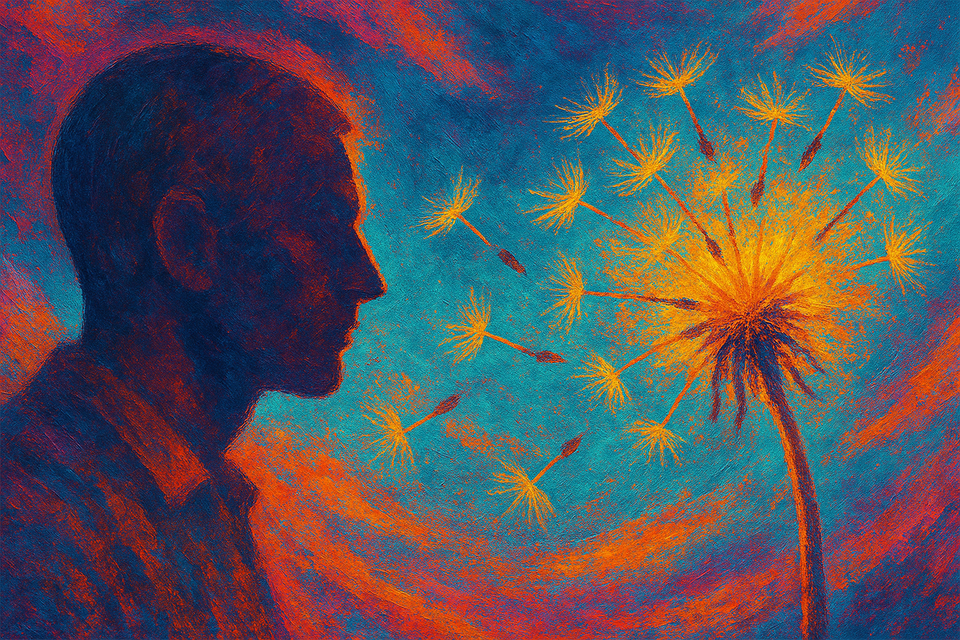
There are years of my life that feel sealed in amber. Muted, heavy, dreamlike.
The stretch between 2013 and 2015 lives there. I was in Glendale, California then, in a two-bedroom apartment that I barely moved through. Most days I’d wake up and the first thing I’d see was the same white wall to my right, and taped to it was a single sheet of printer paper that read:
Like a dandelion up through the pavement, I persist.
I didn’t have a name for what I was going through at the time. Depression felt too clinical, too distant from the heaviness that kept me pinned to the mattress or wandering the apartment like a ghost in my own life. But that’s what it was. And that piece of paper became the only thing I could say to myself that didn’t feel like a lie.
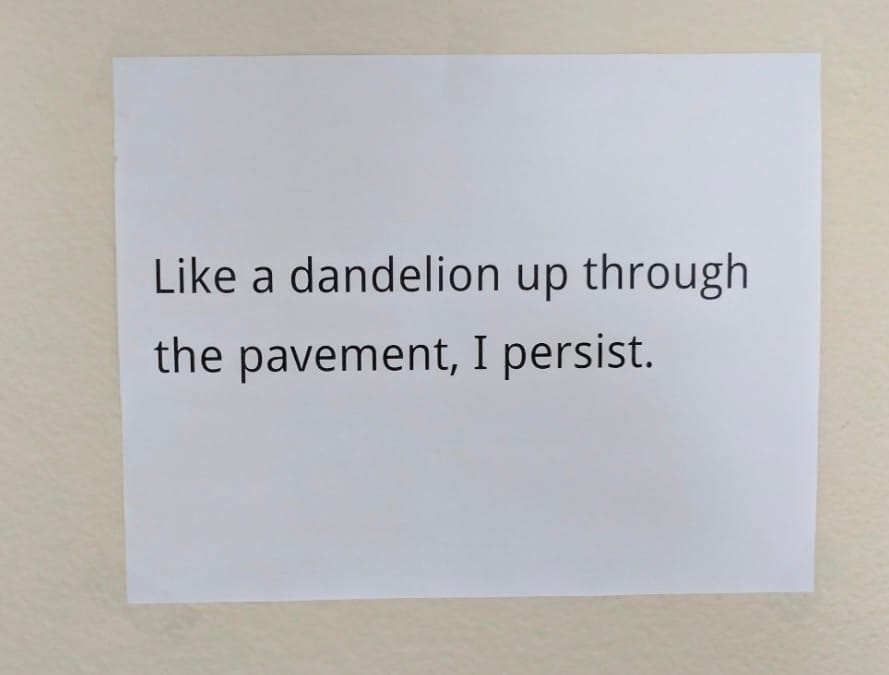
I’d printed it out one day without much thought. I don’t even remember where I first saw it. Somewhere online, maybe Tumblr. The quote was from Wentworth Miller, written after he was mocked in memes for his weight. I didn’t know much about him beyond Prison Break, but there was something about that line, the quiet defiance threaded through it, that landed differently. It wasn’t grand or poetic. It was just honest. Survival dressed up as a sentence.
Those days, I needed something to face in the morning that wasn’t just the emptiness of the room or the weight of my own stillness. I’d been laid off for the first time in my career. I was about a year into what would become an eighteen-month stretch of unemployment. I’d left a toxic relationship that had slowly dismantled my sense of self, and what remained felt unrecognizable. I’d gained weight. Drifted from friends. Stopped making anything. Mostly I just existed in this half-life of numbness punctuated by moments of sharp, bewildering sadness.
Every morning, I’d lie there and stare at that quote. Some days I’d manage to get up. Other days I’d just stay in bed, scrolling through nothing or listening to music on repeat. Comfortably Numb was the constant. Every version of it, but especially the original and the 1980 live recordings, with that slow, aching solo that seemed to stretch time itself and fill the apartment with something that felt like company. The song mirrored what I felt: that strange, suspended space between pain and nothing, where emotion tries to break through but can’t quite form into something you can name.
I spent hours on the patio, smoking joints and staring out at the city sprawl. My neighbors were an older Armenian couple who rarely spoke, but whenever we crossed paths in the hallway or by the mailboxes, I saw something in their eyes. Sympathy, maybe, or just recognition. They must’ve known something of what I was going through. Or maybe I just wanted to believe they did. When I finally moved out in 2016, they handed me their own welcome mat as a parting gift. It said Welcome Home. I still have it. I can’t bring myself to get rid of it.
Looking back, that gesture feels like a metaphor for that whole season of my life: strangers offering quiet kindness when I couldn’t ask for it. Small things holding me together when I couldn’t hold myself. That piece of paper on the wall. That mat. The music. I wasn’t building anything then. I was just trying not to disappear.
When I took the quote down on the day I moved to Boston in 2017, the apartment was empty and echoing. I remember standing in the doorway with the paper in my hand, exhausted and uncertain. I was technically moving forward. Better job, better money, a chance to start over. But I felt like I was leaving as someone I didn’t know how to be anymore. I cried a little. Not because I was sad to leave Glendale, but because I didn’t know what any of it meant. I didn’t know if I’d actually survived or if I was just going through the motions of survival.
Years later, after moving again and again, I thought I’d lost that paper. But recently, while scrolling through old photos on my phone, I found the picture I’d taken of it before I left. Just the quote, taped to that white wall, slightly crooked. The words hit differently now. I’m not in that place anymore. My life runs on steadier rails. I have a wife I love, a job I care about, friends I see regularly, and a kind of groundedness I used to think wasn’t meant for people like me. And yet when I see that photo, or when I hear the opening notes of Comfortably Numb, I still feel something crack open inside me.
Recognition, I think. A reminder of what survival actually looked like for me. Not heroic, not cinematic, but quiet and unglamorous and often invisible. Just a person trying to remember they still existed, that they still mattered, even when it felt like they didn’t.
People like to talk about “coming out the other side” of depression as if there’s a clean break between before and after. As if you emerge transformed, fully healed, ready to close the door on who you were. But there isn’t a clean break. There’s just distance. The person I was then is still part of the person I am now. The difference is that I don’t have to fight the same way anymore. I can look at that version of myself, the one who couldn’t get off the couch, who smoked too much and felt too little, with some compassion now. Even gratitude, for holding on long enough for the rest of me to catch up.
There’s a bittersweetness to that kind of reflection. The way music or a photograph can collapse time and bring you back to who you were when you needed saving. But I don’t run from it anymore. I think about those mornings in Glendale, lying in bed and staring at that wall, and I realize that persistence isn’t just about surviving the hard years. You have to remember them without shame. You have to understand that the version of you that barely made it through still deserves to be honored, not erased.
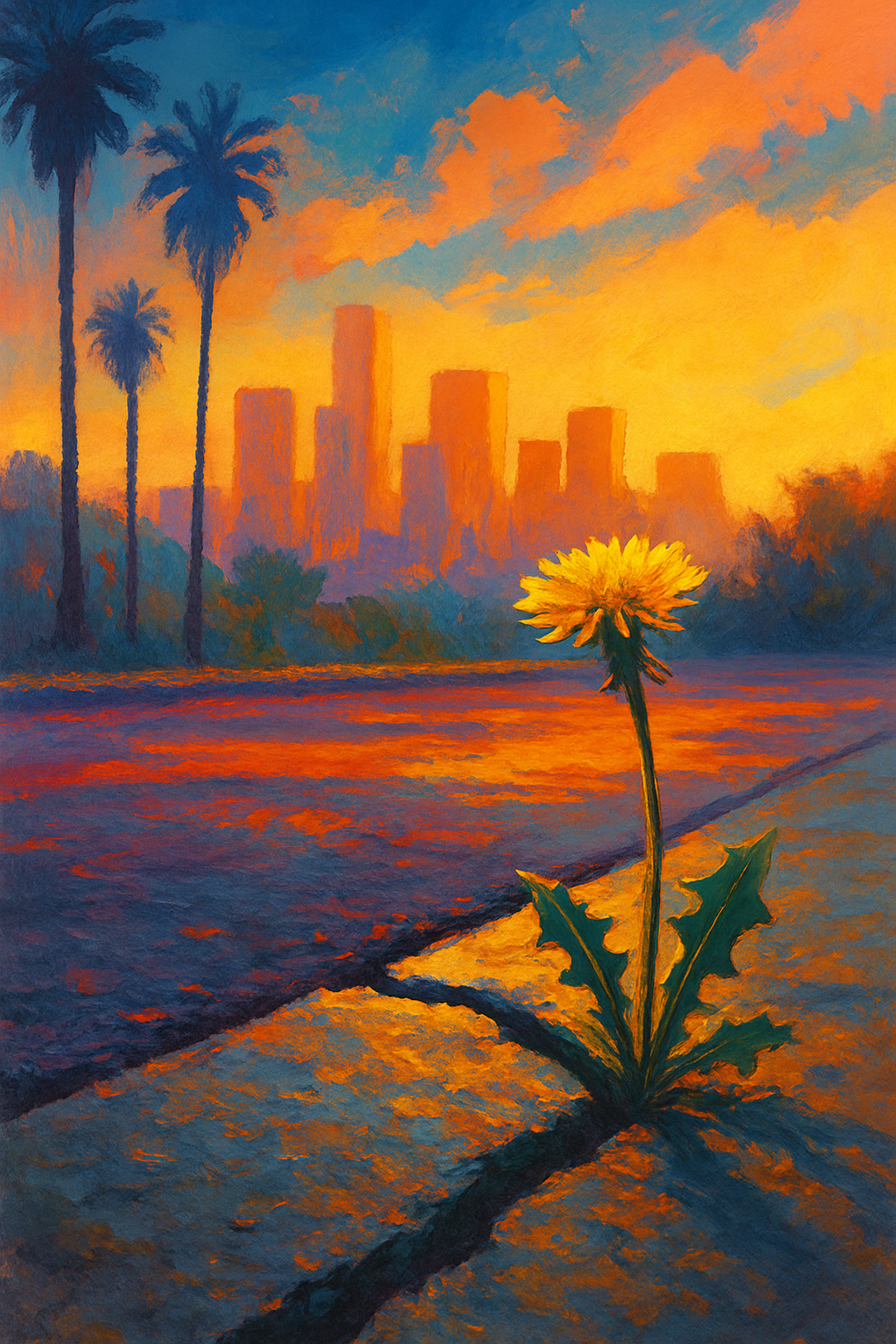
Every time I see that photo, or catch the first few chords of that song, I think about the person I was. Motionless, adrift, but still reaching for something, even if it was just a single line on a piece of paper. And I think about that quote: Like a dandelion up through the pavement, I persist.
Back then, I thought it was about endurance. About toughing it out. Now I think persistence is more tender than that. The fragile, stubborn kind of growing that happens even in the dark, even when no one’s watching, even when you’re not sure you have the strength. The kind that cracks through concrete not because it’s powerful, but because it refuses to stop trying.
That’s what I was doing, I think. Not thriving. Just trying. And somehow, that was enough.